What to Eat During Pregnancy When Nothing Sounds Good
Realistic food ideas for nausea, food aversions, low appetite, and the days when planning a perfect meal is the last thing you want to do.
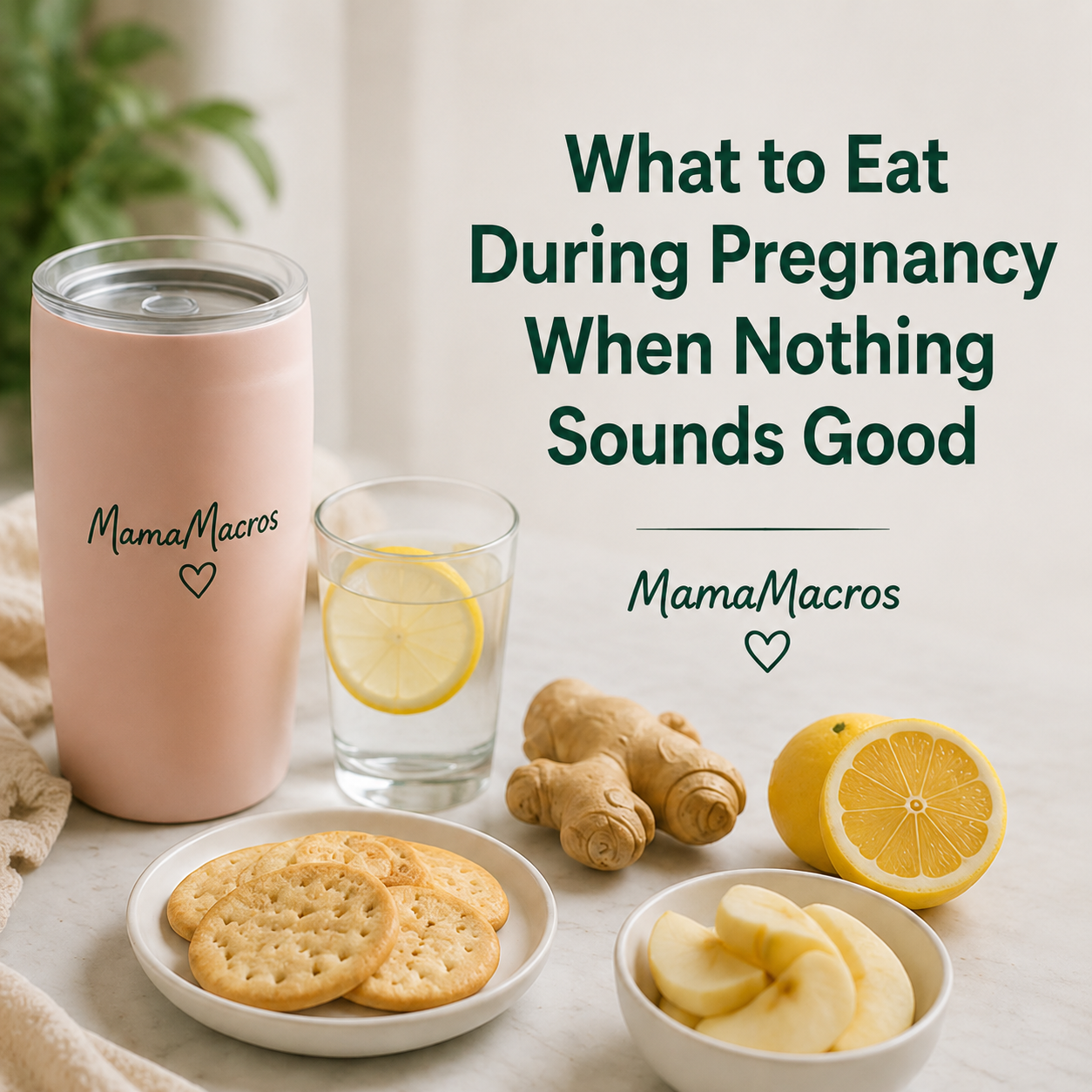
Snack plate with crackers, fruit, and a drink.
Pregnancy can completely change the way food smells, tastes, and feels. A meal you loved last week may suddenly sound impossible, while a plain cracker may be the only thing that feels manageable. On those days, the goal does not have to be a picture-perfect plate. Start with what you can tolerate and build from there.
Start Small Instead of Forcing a Full Meal
ACOG suggests eating several small meals and frequent bites rather than letting your stomach stay empty when nausea is a problem. Plain foods such as toast, crackers, bananas, rice, or applesauce may be easier to tolerate for some people.
Easy Foods to Try
- Toast with peanut butter or another nut or seed butter
- Greek yogurt with fruit
- Crackers with cheese
- Banana with peanut butter
- Cold fruit, applesauce, or a smoothie
- Rice, potatoes, oatmeal, or plain pasta
- Eggs and toast if savory foods sound good
- Soup with crackers or bread
- A simple protein shake when chewing a meal feels difficult
Add Protein Where You Can
ACOG notes that adding protein to meals may help with pregnancy nausea. You do not need to turn every snack into a high-protein meal; simply pair tolerated foods when it feels possible. Yogurt, milk, eggs, nut butters, nuts, seeds, beans, and other protein foods can be useful options.

Banana-yogurt smoothie.
Cold Foods Can Be Easier
Strong cooking smells can trigger nausea or food aversions. If that is happening, try foods that require little cooking, use a fan while preparing food, or ask someone else to handle foods with strong odors when possible.
Do Not Forget Fluids
ACOG recommends drinking throughout the day during pregnancy and notes that dehydration can make nausea worse. If plain water is unappealing, try chilled water, ice, fruit-infused water, milk, broth, or another beverage your healthcare team says is appropriate for you.
Helpful Tools for Low-Appetite Days
When to Call Your Healthcare Professional
If you cannot keep food or fluids down, are losing weight, feel dehydrated, or your nausea and vomiting are becoming difficult to manage, contact your obstetric healthcare professional. Severe nausea and vomiting can require treatment.